
Explora Atacama: A Scouting Trip to the Driest Desert on Earth
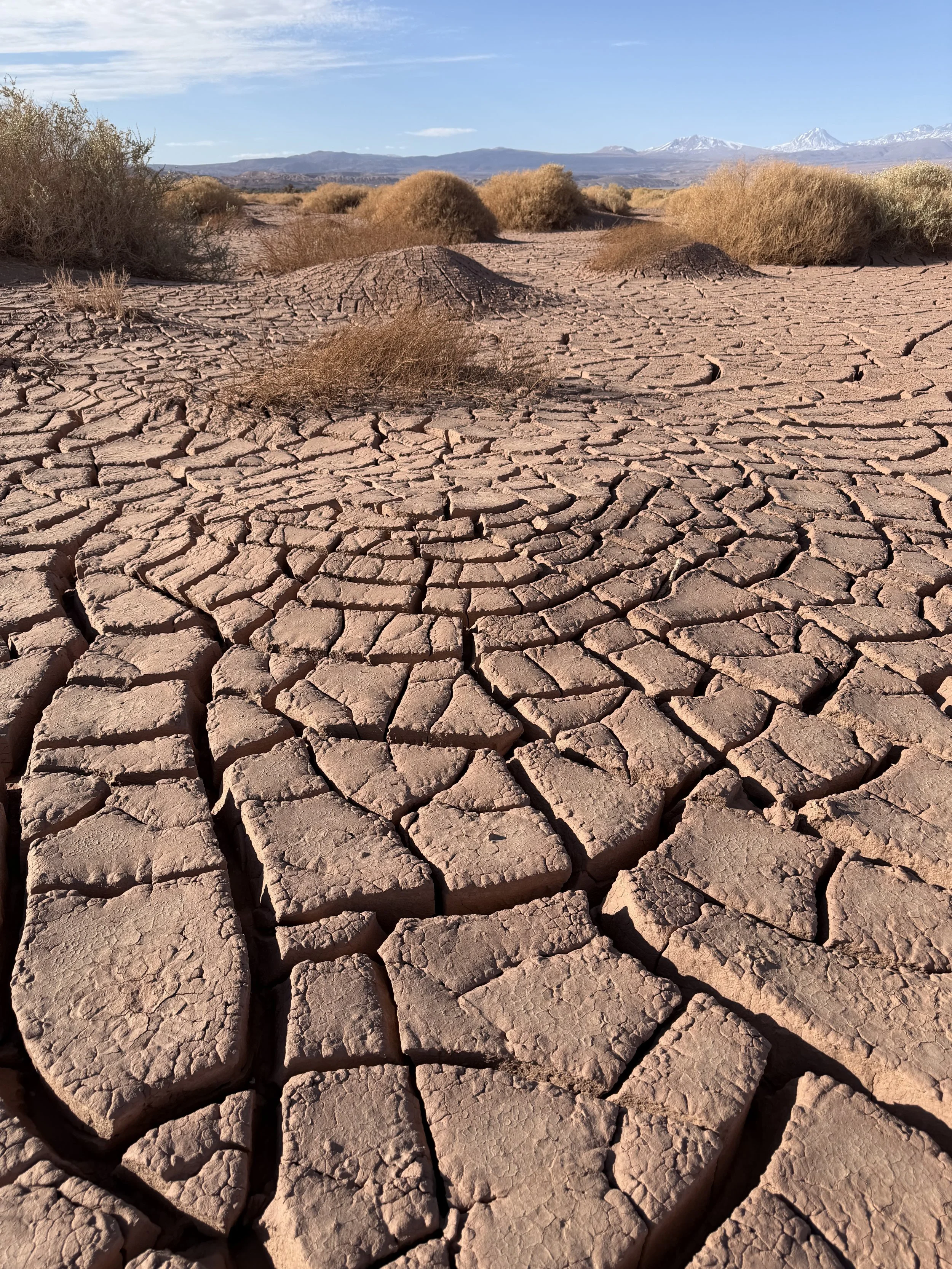
I was extraordinarily lucky to be selected to join a group of advisors on a hosted trip to experience two legendary lodges in Chile: Explora Atacama and Explora Torres del Paine. First stop was the desert. I have never been a big desert person. I greatly prefer deep green forests, or turquoise blue seas; the desert is not a landscape that has ever called to me. That being said, I was surprised how much I enjoyed my time in the driest desert on Earth and understand exactly why several luxury lodges have planted their flags here.
Getting There
If you're considering Chile, you need to budget the time. Flights from the US to Santiago run 7-10 hours depending on your home city, and Chile aligns with Eastern Standard Time, or one hour ahead depending on daylight savings. From Santiago, you can connect directly to Calama (then a 75-minute car transfer to Atacama, included in the rate) or break up the trip with a night in Santiago first.
I was short on time, so mine looked like: Chicago → Atlanta → Santiago (overnight flight) → Calama → Explora Atacama. It was about 26 hours door to door. Everyone else in my group had spent a night in Santiago beforehand, but even with the long haul, I was ready to go the moment I arrived.
The Explora Difference
Explora calls itself an expedition company that happens to operate lodges, and that spirit is obvious from the moment you walk in. Guides meet you on arrival to learn your interests and physical ability, then recommend which "explorations" fit best. If your schedule allows, they'll get you out on a hike that same day.
I’ll get into the specifics of our explorations shortly, but I first want to stress the quality of the guides because this is a standout attribute of this company. Becoming a guide at Explora is extremely competitive: 80-200 people apply each season, and Explora takes about eight. My group joked they should make a reality show about this process. These are all young, beautiful, physically fit people in a gorgeous natural environment, vying to become guides at one of the premier South American adventure companies. Once selected, they train for a minimum of six months on local flora, fauna, geology, archaeology, and history. It shows! My group peppered them with questions nonstop, on everything, and they never missed a beat.
Explorations are capped at eight guests, and while some can be privatized for an extra cost, most run as small groups. I loved this model because each outing brought a fascinating mix of people including American diplomats based in Santiago, acclaimed photographers, tech and finance types, and plenty of South Americans. I enjoyed great talks every day and felt like my world expanded a bit with each conversation.
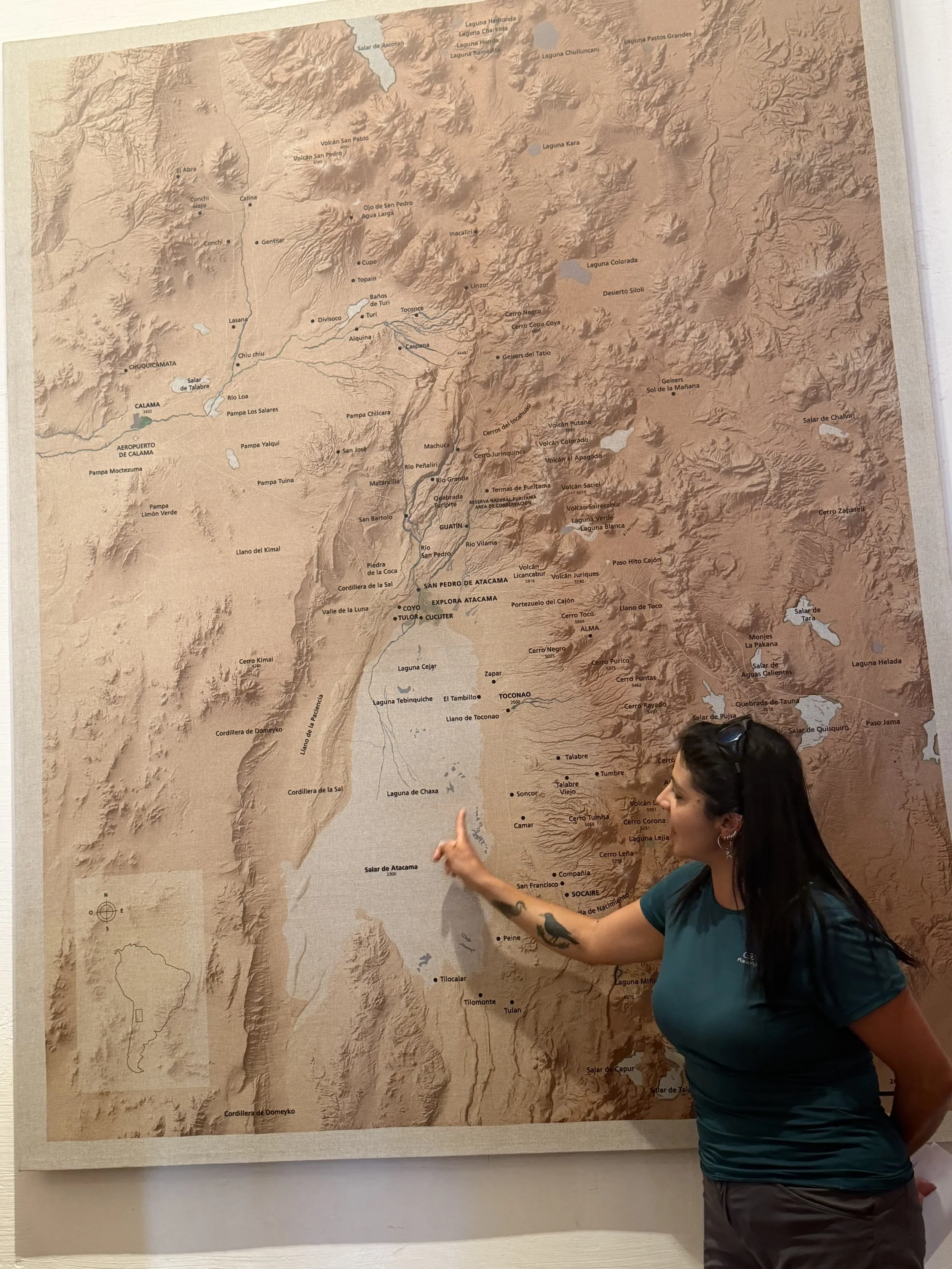
Before every outing, the guide walks through the area map to explain the day’s exploration.
About Atacama
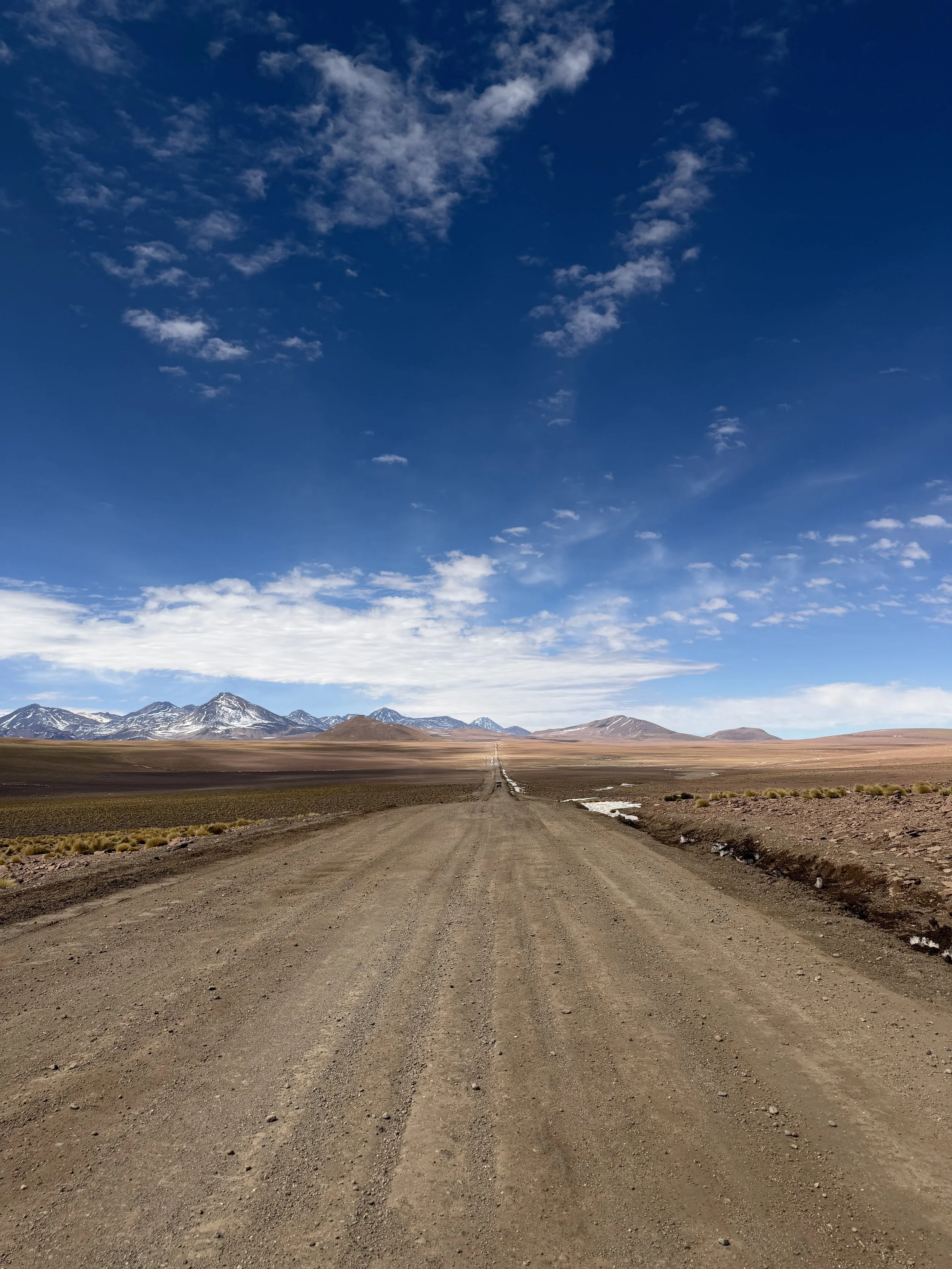
Allow me some science exposition here. The Atacama is considered the driest desert on Earth outside the polar regions; some weather stations here have never recorded rainfall, and researchers believe parts of the region have stayed arid for millions of years. It's also incredibly stark and beautiful. The desert is ringed by a chain of volcanic peaks along the Andes, most famously Licancabur, whose near-perfect cone rises just outside San Pedro de Atacama. The high altitude, low humidity, and near-total absence of light pollution are why the region hosts some of the world's most important astronomical observatories. NASA has even tested Mars rover technology here, given how closely the terrain mimics the Martian surface.
What We Explored
Our introductory exploration was the Valley of Mars, and the highlight was a barefoot walk down a massive sand dune where the sand flowed like water under my feet. Sandboarding is the more adventurous option, but I preferred the walk.
From there, our days included:
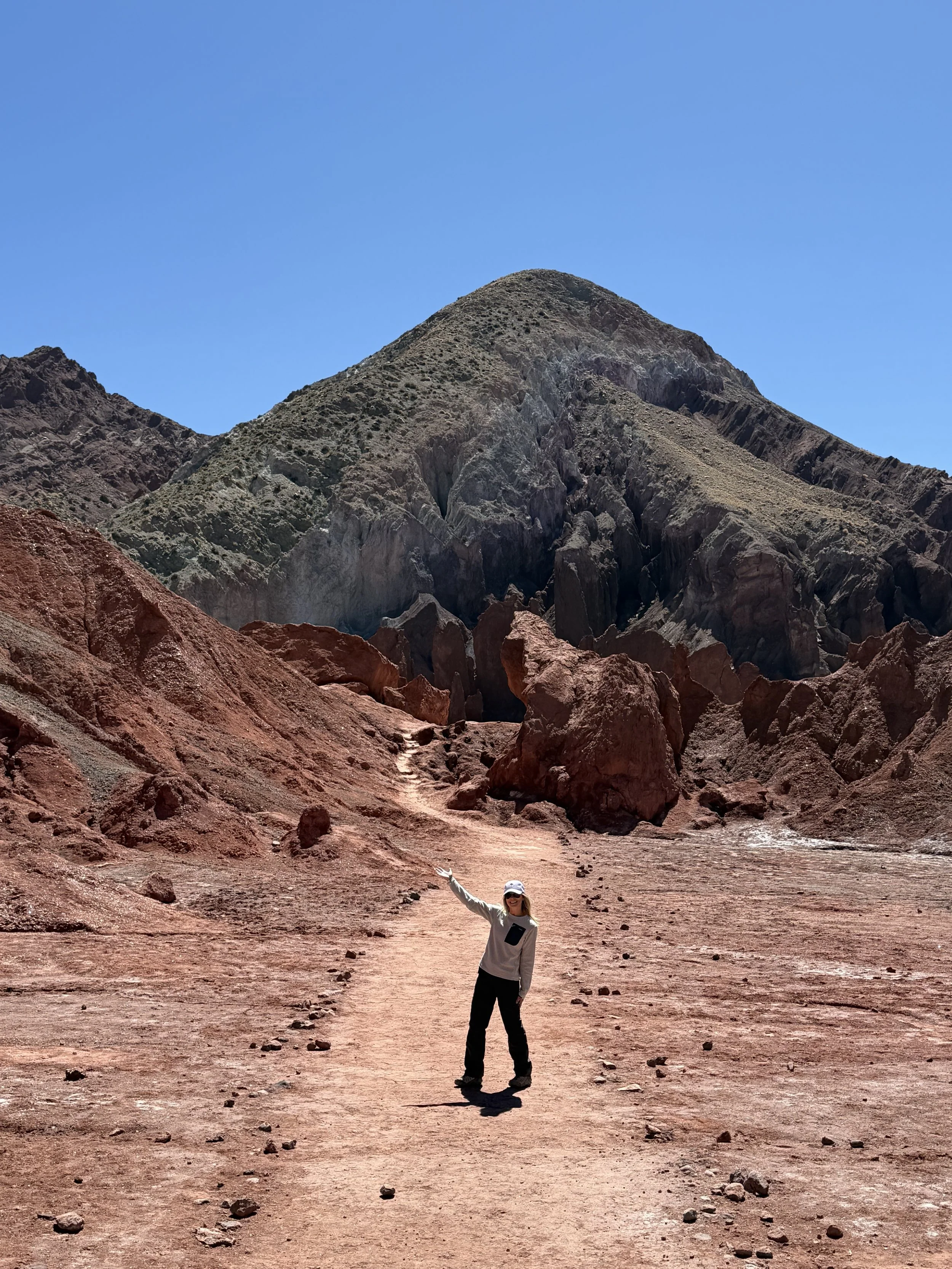
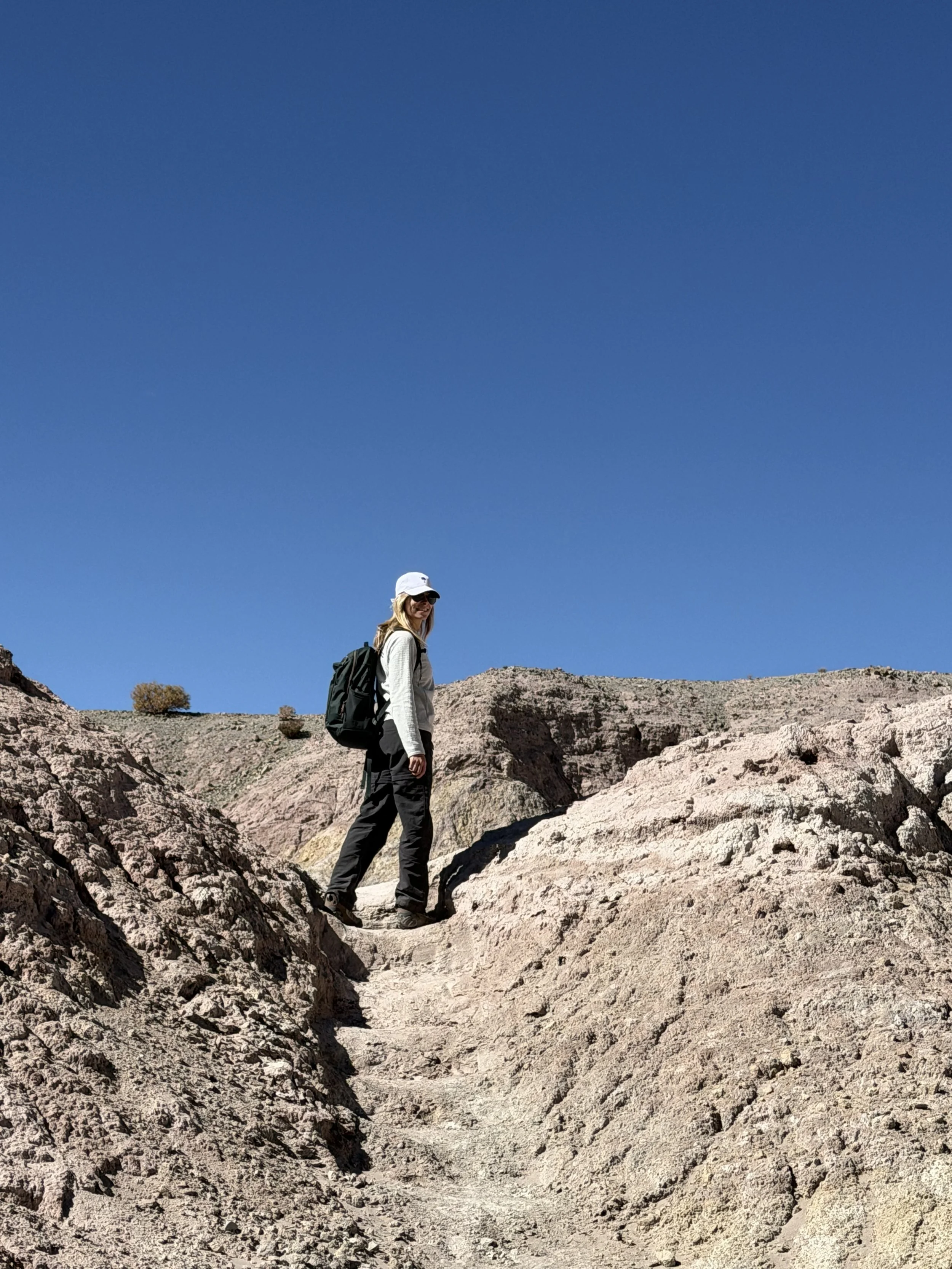
A hike through Rainbow Valley, past 500+ year-old cardón cacti
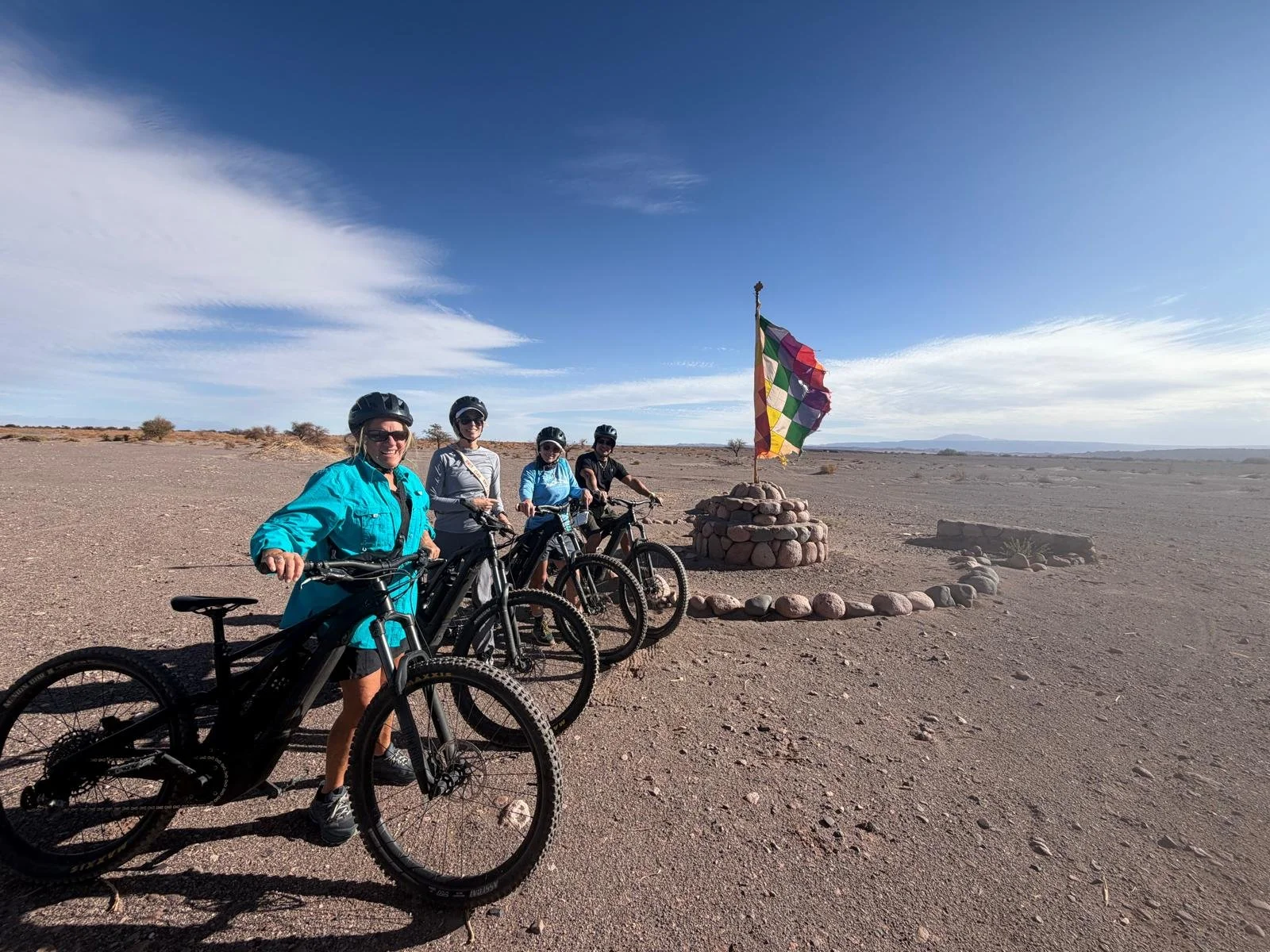
An e-bike ride through San Pedro de Atacama, with a stop at our guide's personal meditation spot
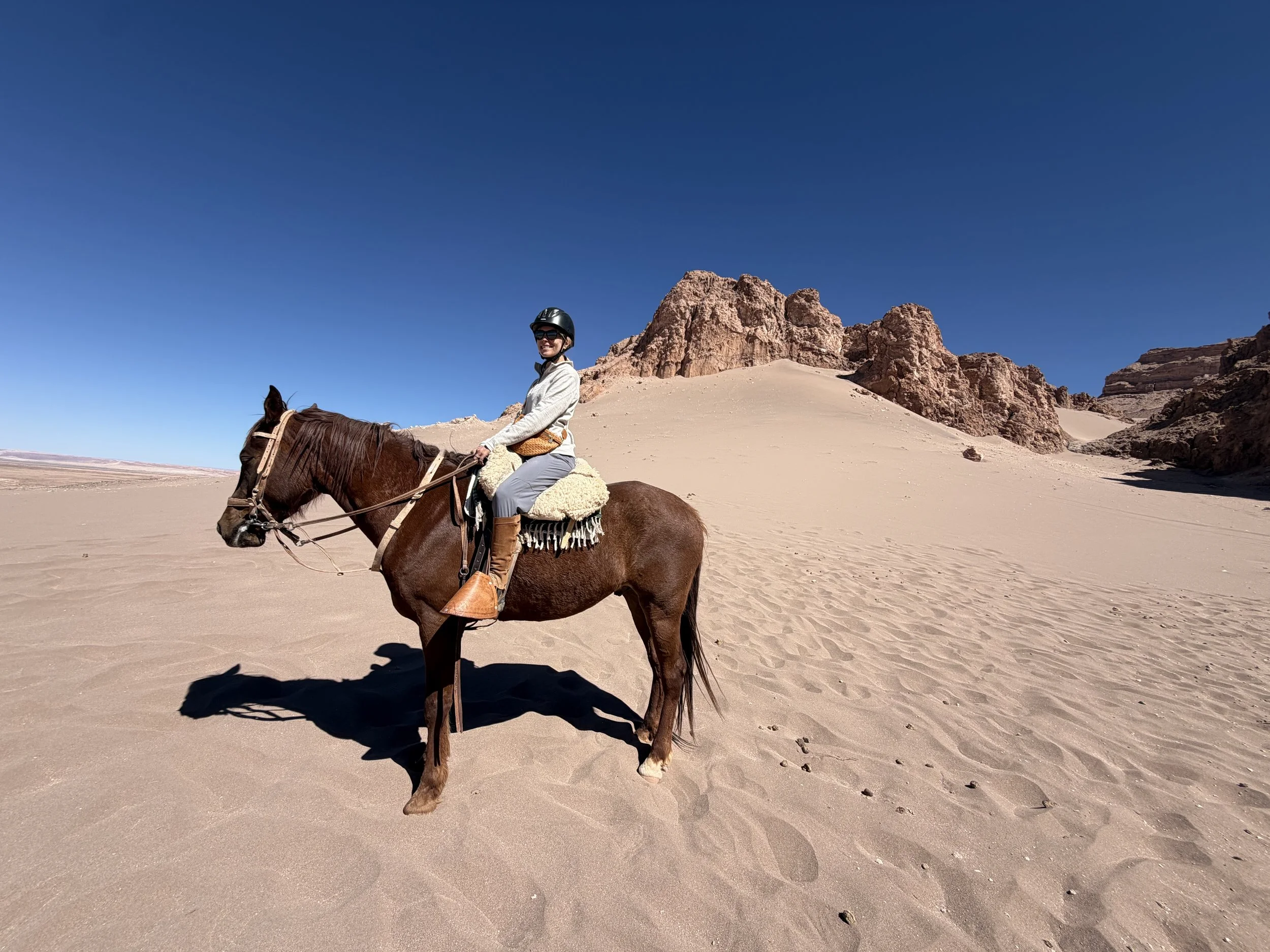
A horseback ride across the desert (very Lawrence of Arabia)
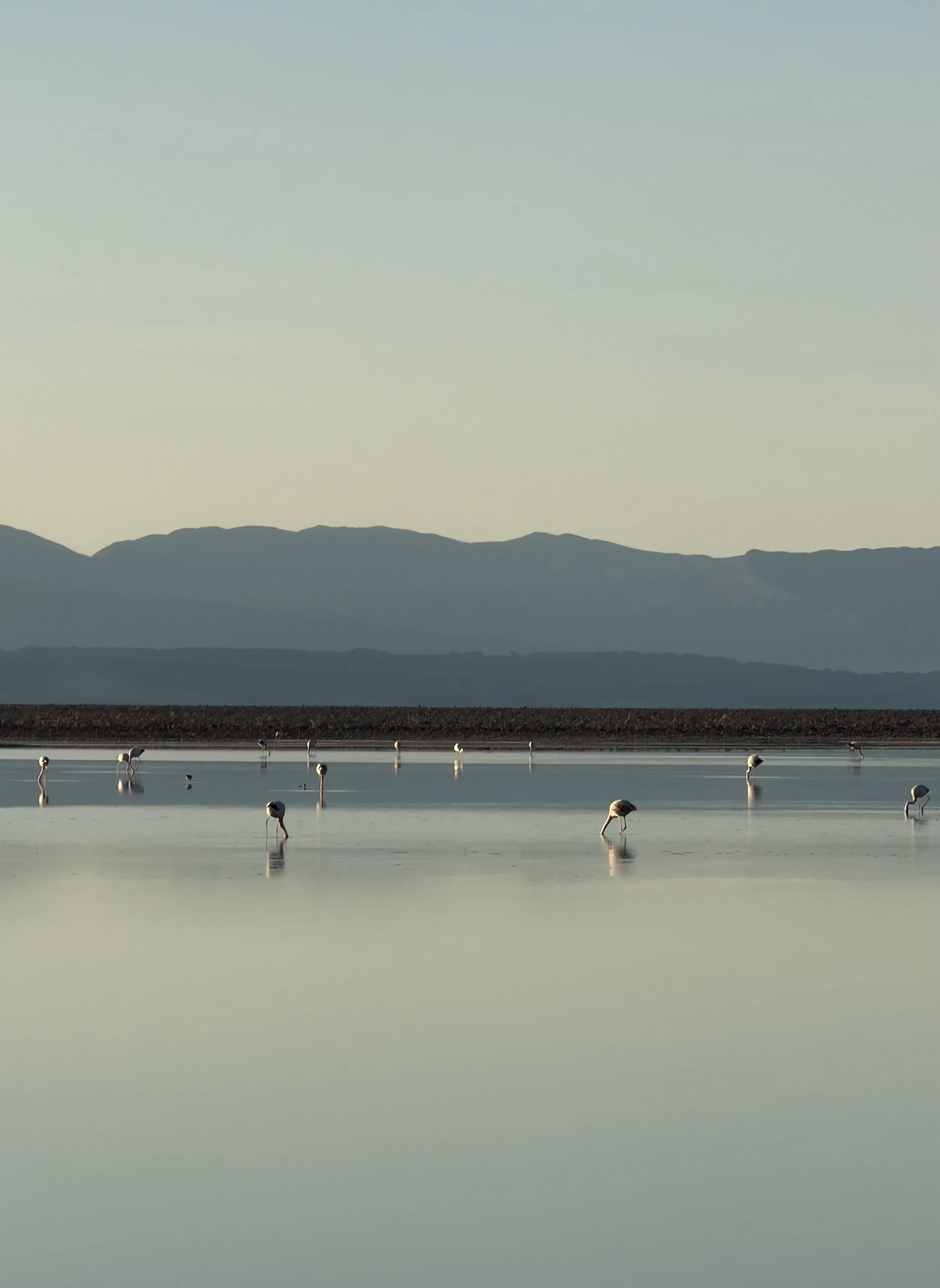
Salt flats thick with flamingoes
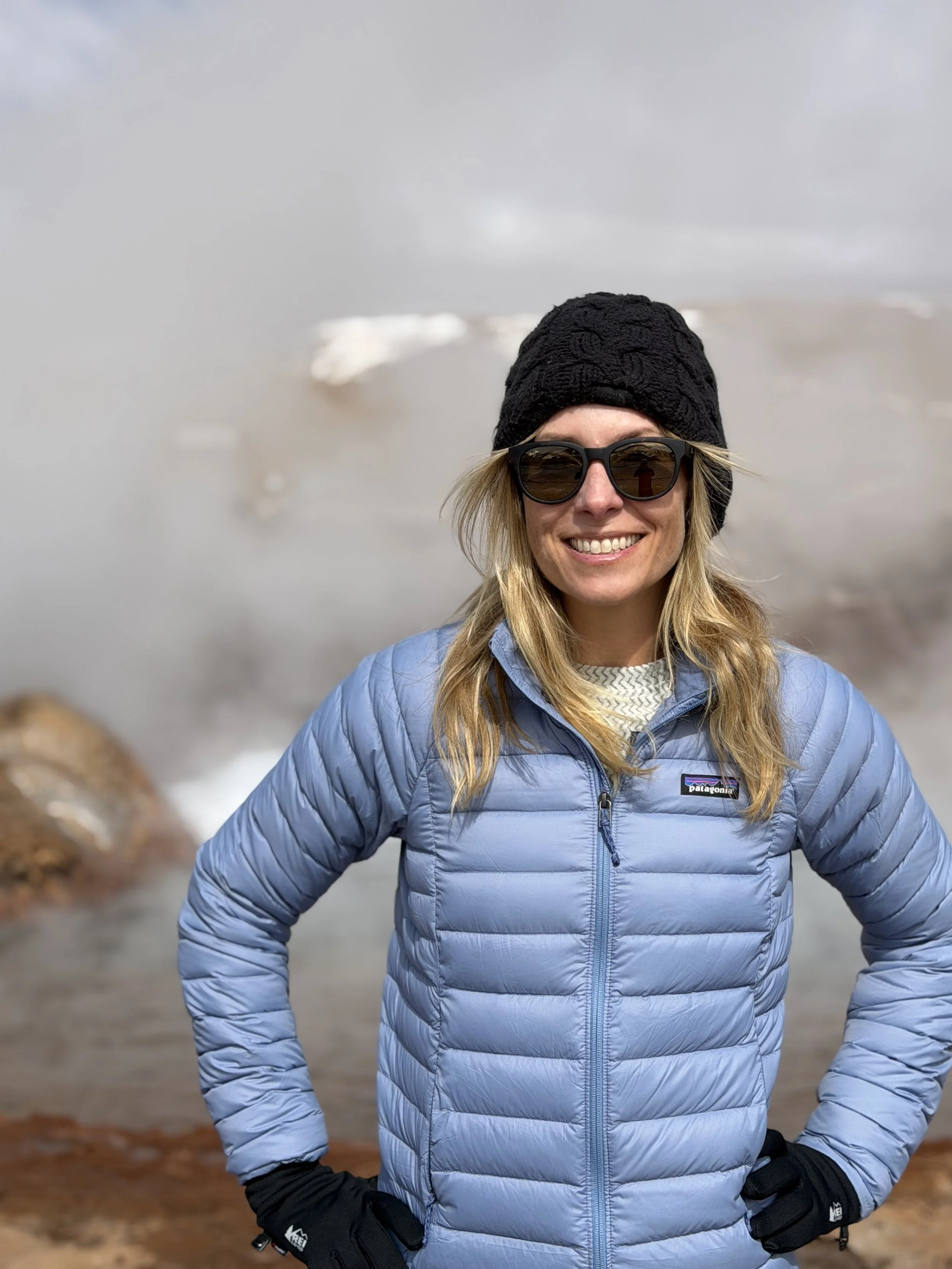
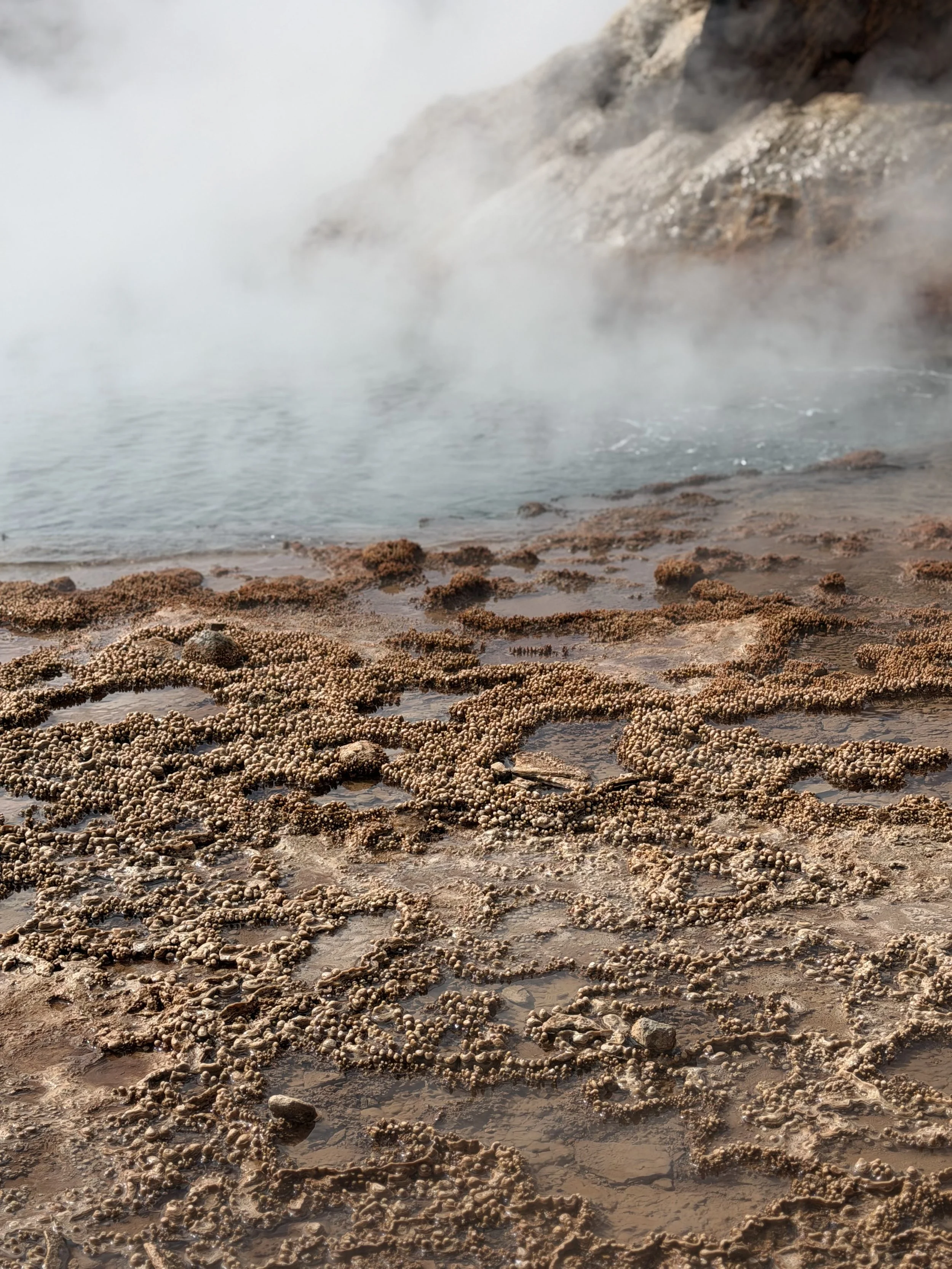
A trek to the altiplano (“altiplano” = high plateau), elevation roughly 14,000 feet and dotted with bubbling and steaming geysers
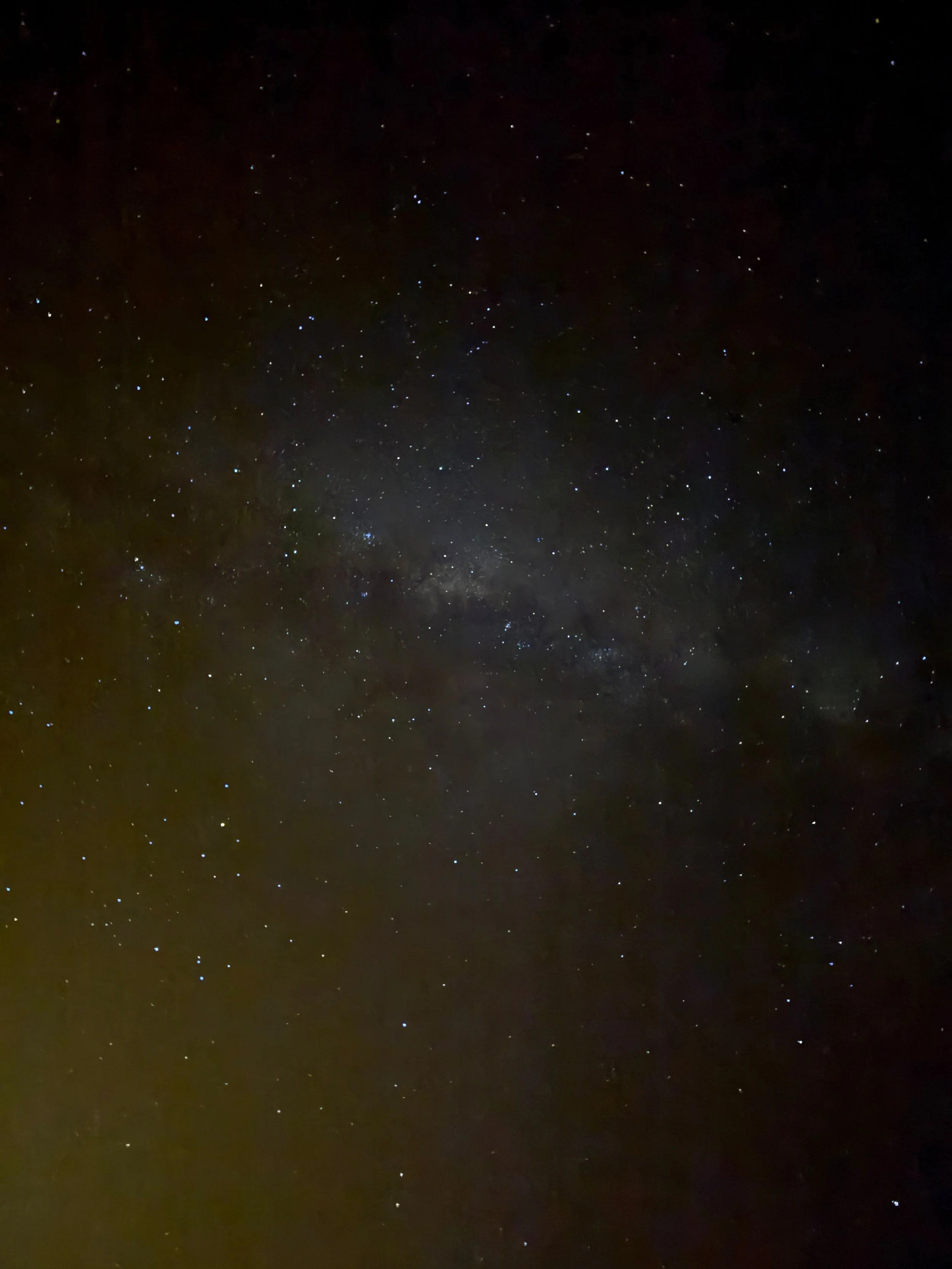
An incredible evening at Explora's onsite observatory (we saw Saturn!)
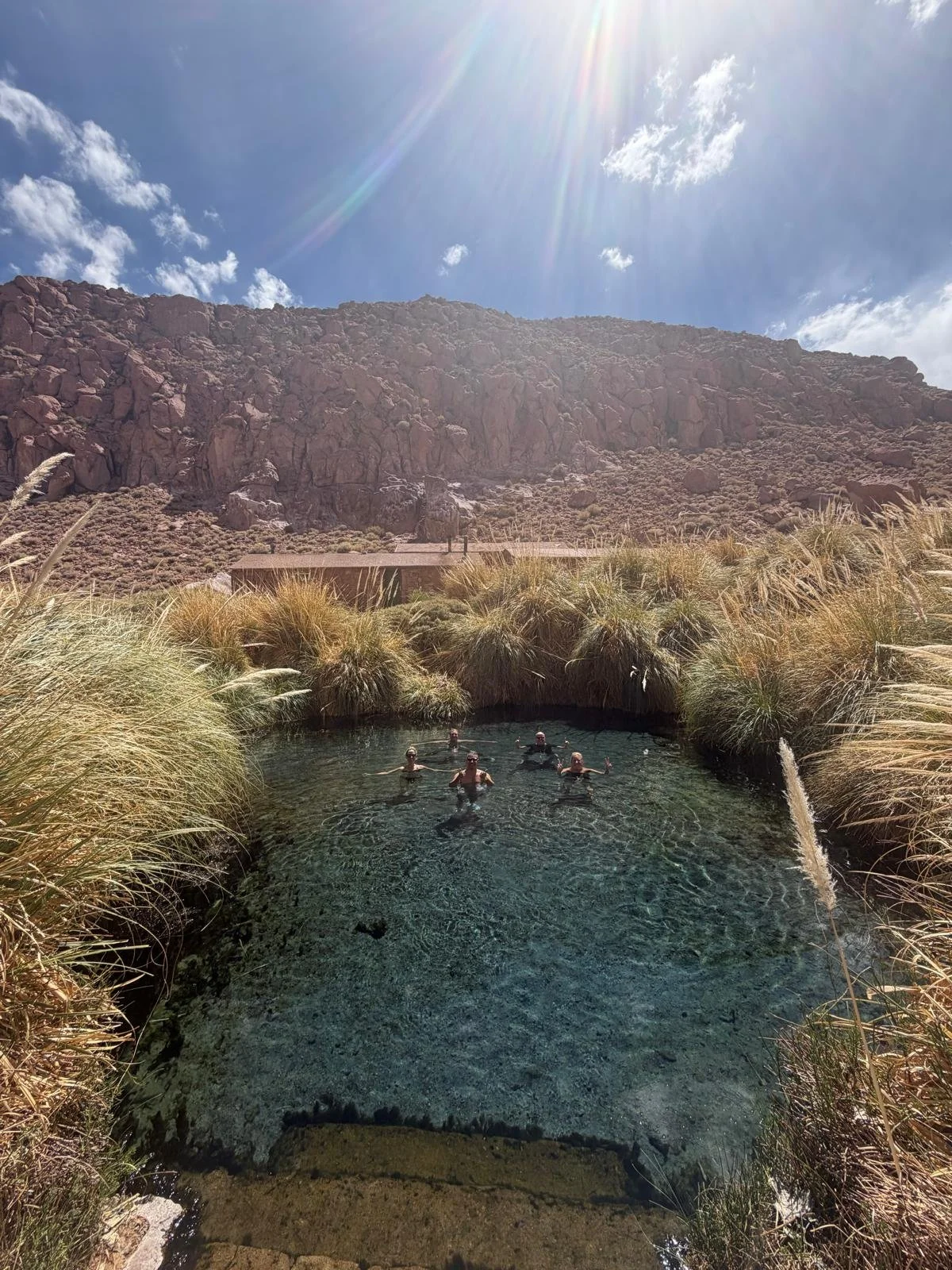
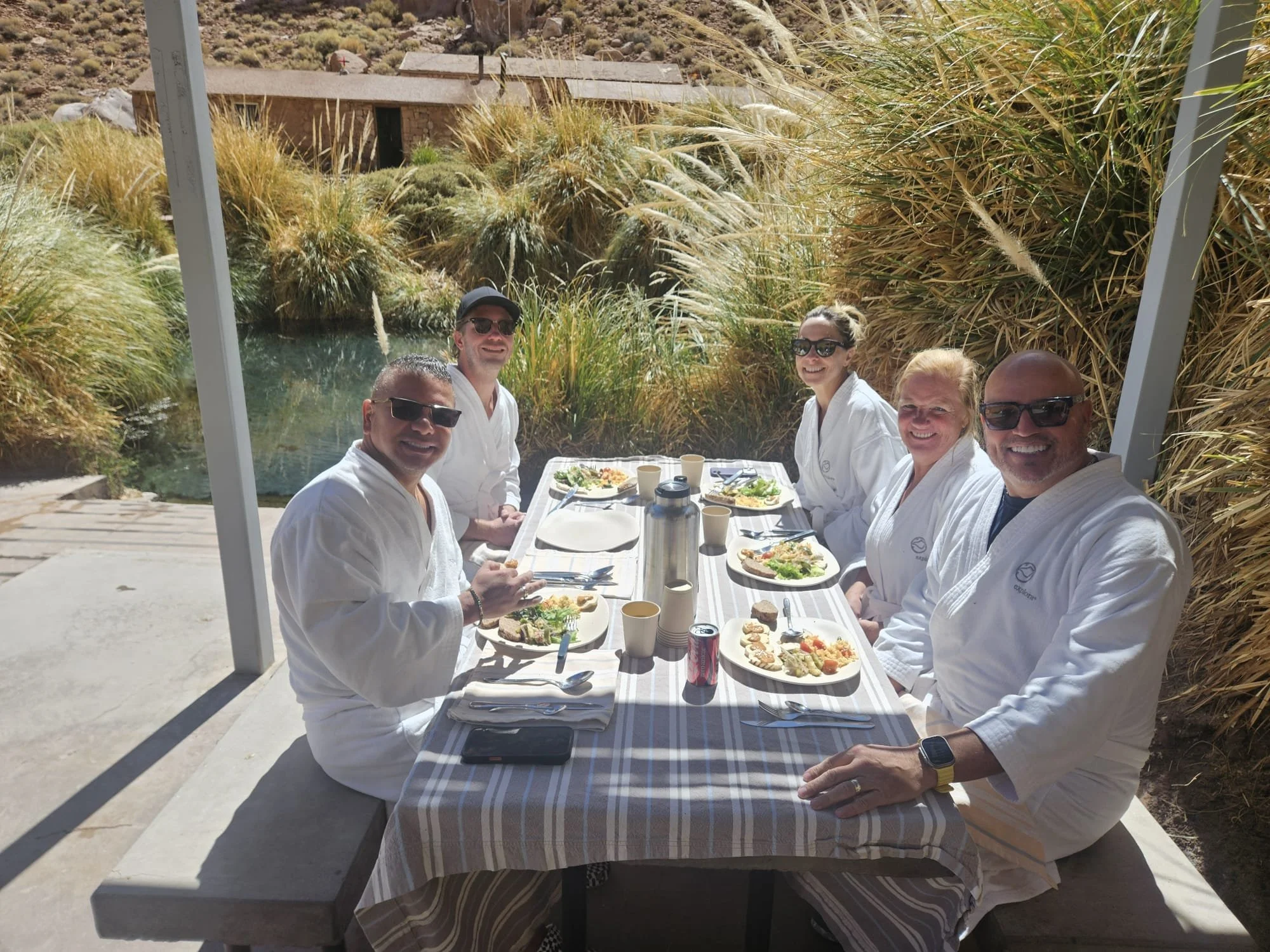
A visit to Explora's private Puritama Conservation Reserve, capped with a picnic at our own private spot (“Puritama” = hot springs)
Conservation in Action
Conservation is one of Explora's core pillars, and we met with their head of conservation while at the lodge. To Explora, conservation includes both care for the natural environment, as well as the people who live there. Caring for the puritama (hot springs) is a joint effort with the native people of the area (referred to as “the communities”). Explora’s support lets them retain control of the resource that their community has long enjoyed while responsibly managed tourism helps fund it. Explora is a certified B corporation, and sustainability and conservation are always at the forefront of every decision they make.
Beyond the Explorations
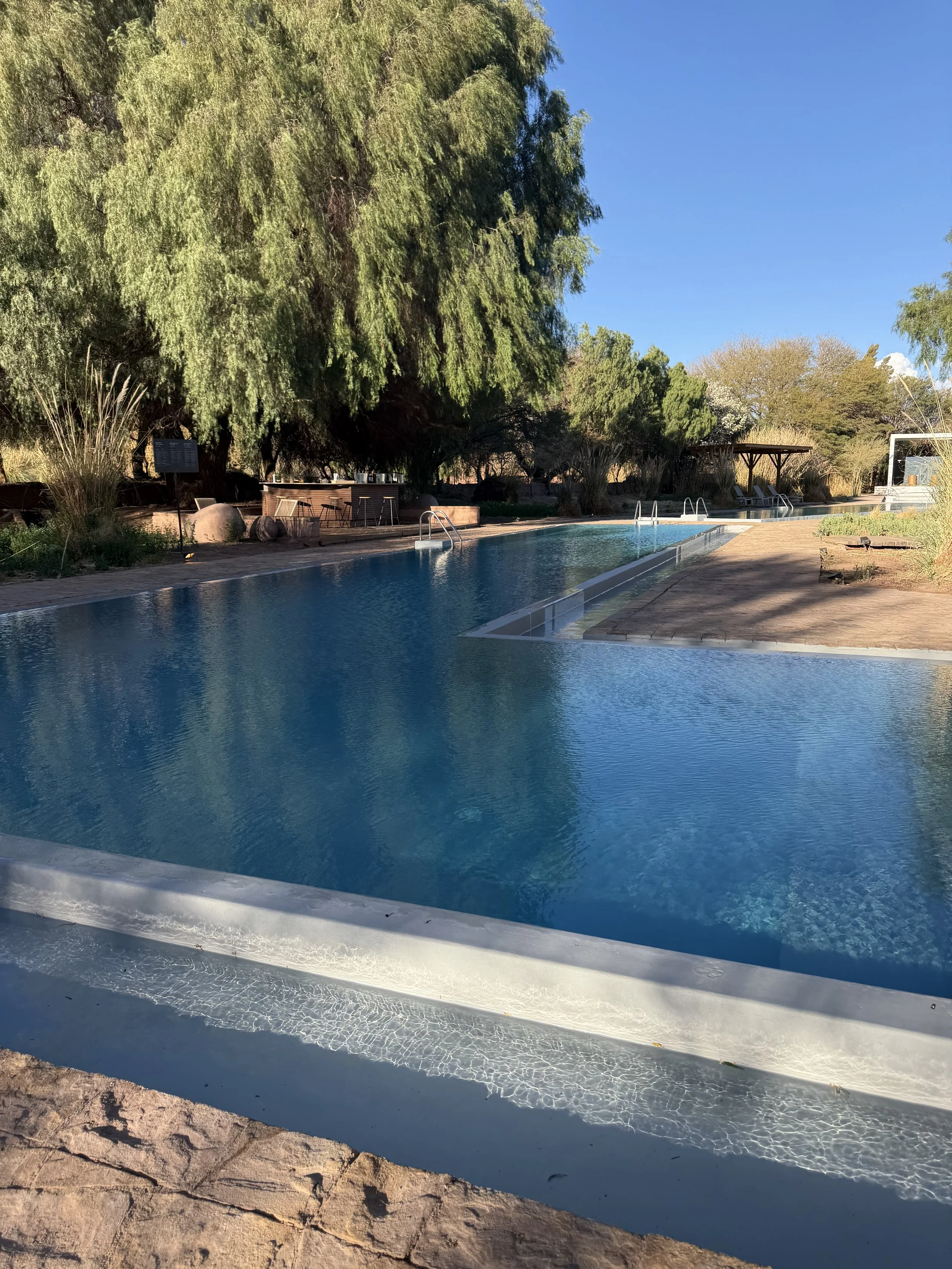
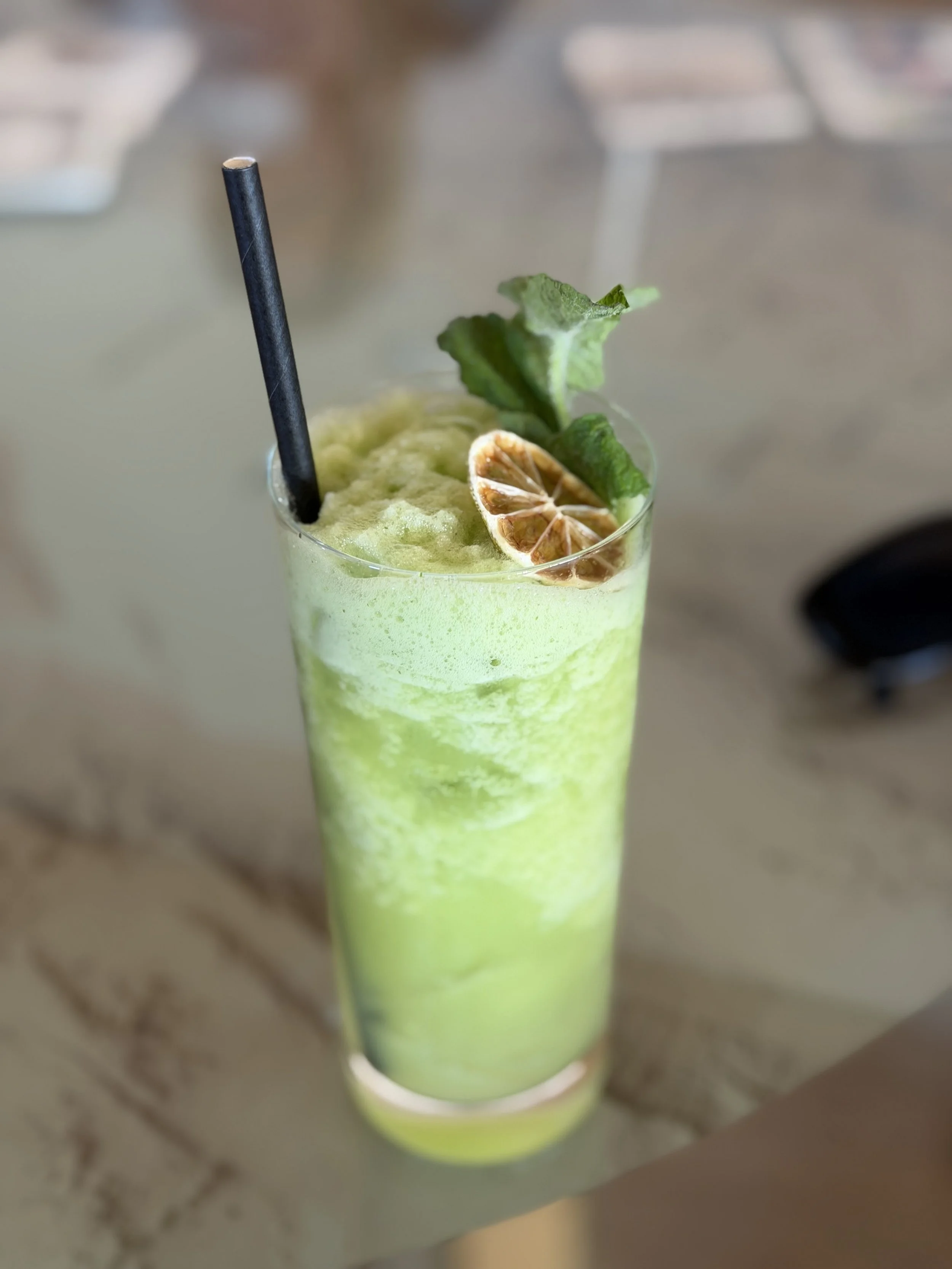
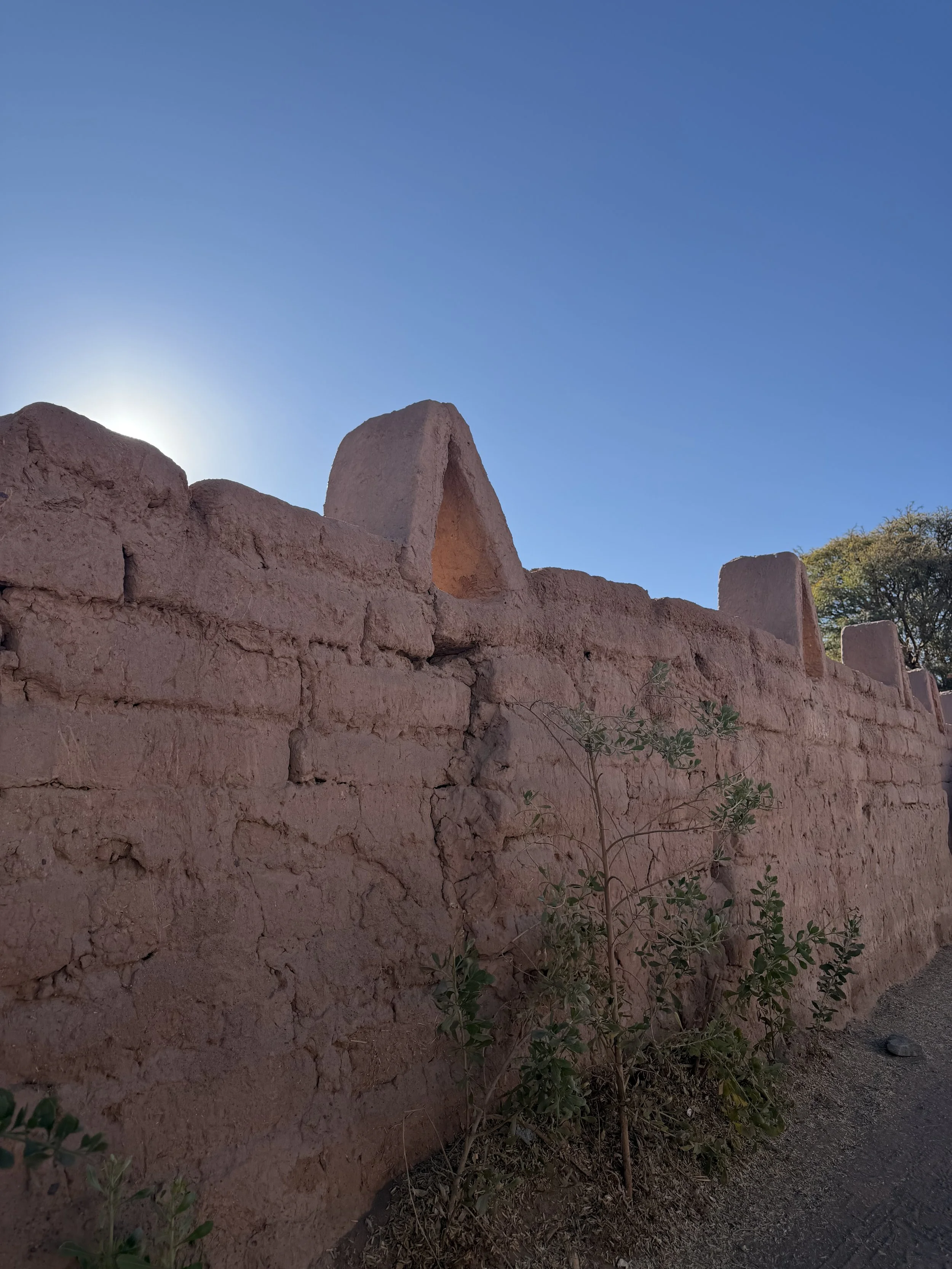
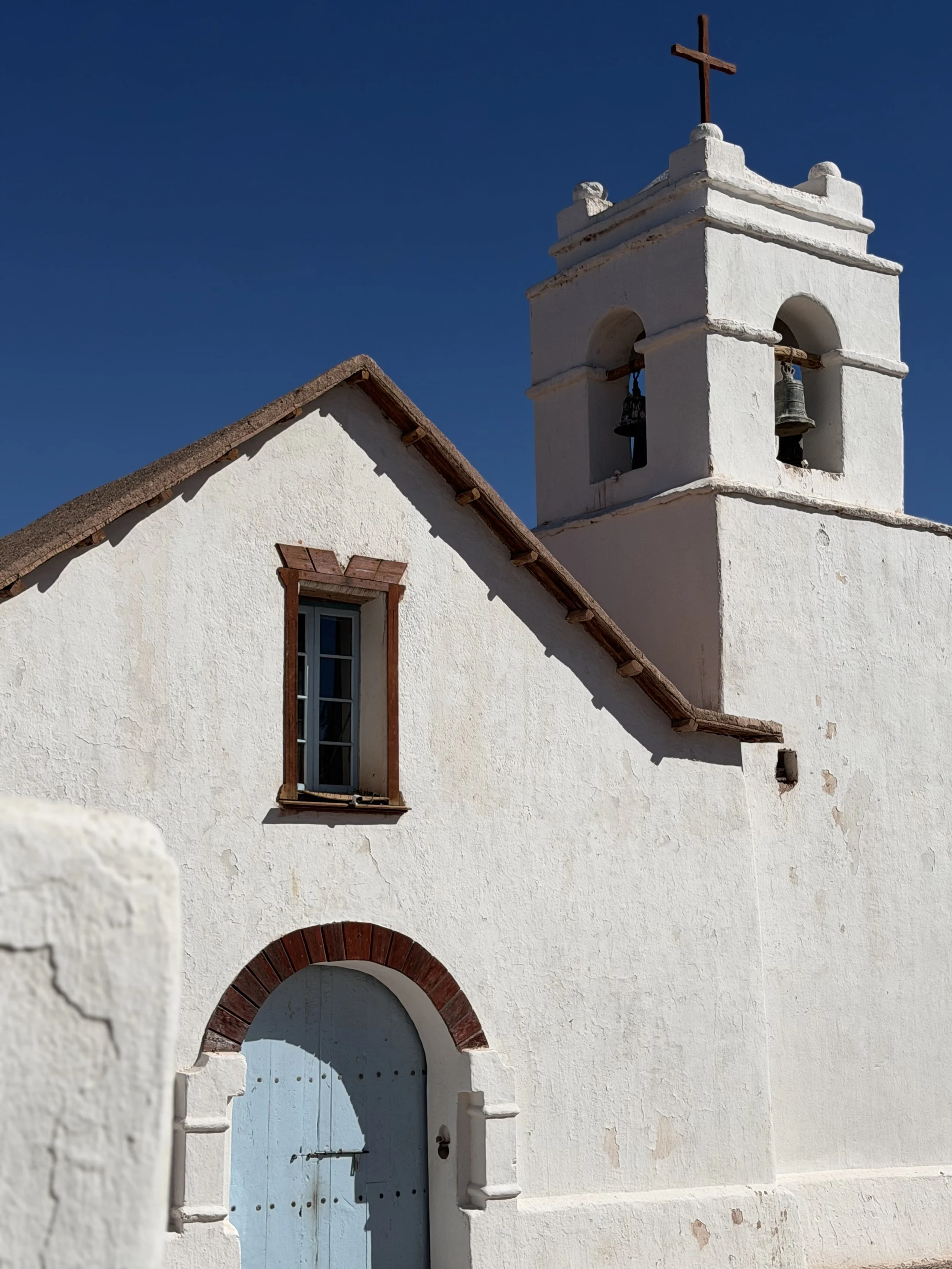
There's an onsite spa beside four outdoor pools and a sauna. And then there's my favorite topic, the food! I'm a hard critic on this front, and I loved it. It's all-inclusive, but there are zero cut corners here: fresh, varied nightly menus, solid cocktails (the Rica Rica Sour was a favorite among my group), and a wine list that's made me a Chilean sauvignon blanc convert. The rooms are being renovated next year, and I'm curious to see the result. A bonus is that it’s also an easy walk into the charming small town of San Pedro itself, where you can get a glimpse of daily desert life.
Good to Know
Altitude: The desert floor sits at 8,000 feet, with some excursions going higher. If altitude is a real concern for you, this may not be the right destination.
Length of stay: Three nights is the minimum, but I'd recommend four. It’s enough to properly settle in and to leave room for a second destination on the same trip.
Best time to visit: Year-round, but shoulder season (spring or fall) is my pick. There are fewer crowds and milder temperatures. Summer (December-February) brings more heat and more tourists, but also longer days for explorations. Winter (June-August) is best for stargazing, but nights can drop below freezing.
Connectivity: WiFi at the lodge is solid. I worked and FaceTimed home without issue. You'll lose cell service out on some explorations (is this a bad thing?), but the guides carry walkie-talkies for emergencies.
Investment: This isn't a budget stop, and neither are the other luxury lodges in the area including Awasi, Tierra, and Nayara. Rates include all meals, explorations, and airport transfers; gratuities and spa treatments are extra. My clients tend to have generous travel budgets, but value still matters, and I think this lodge delivers exceptional value, especially in shoulder season.
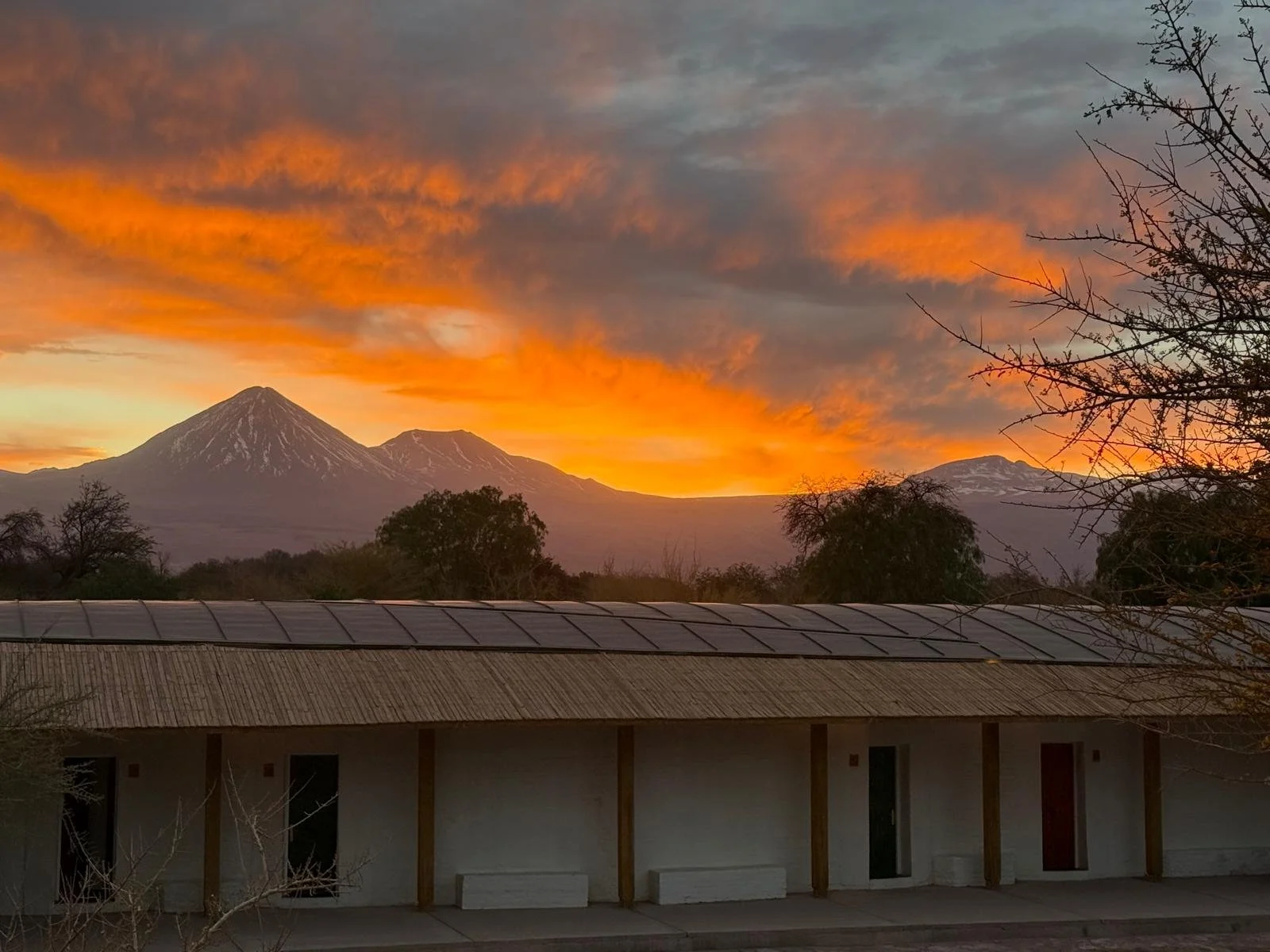
Sunrise in back of the lodge, and Licancabur volcano on display
The Bottom Line
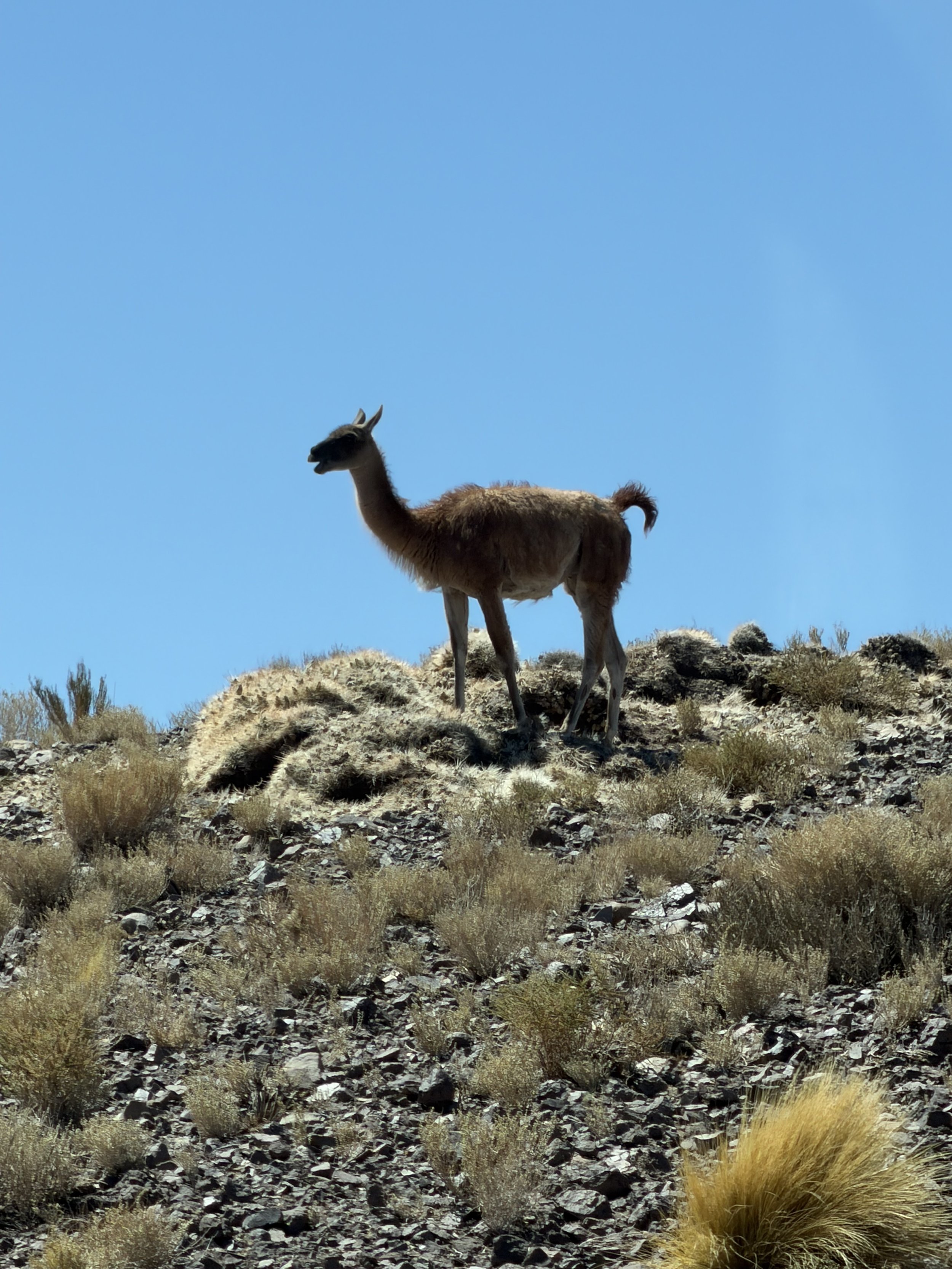
The Atacama is vast, seemingly barren — except for the guanacos, vicuñas, flamingoes, donkeys, llamas, and alpacas we encountered — and wonderfully remote. If you're looking for a true escape from the modern world, this is it. There's nowhere else quite like it.
Next up: the crown jewel in Explora's cap, Torres del Paine. Stay tuned!